
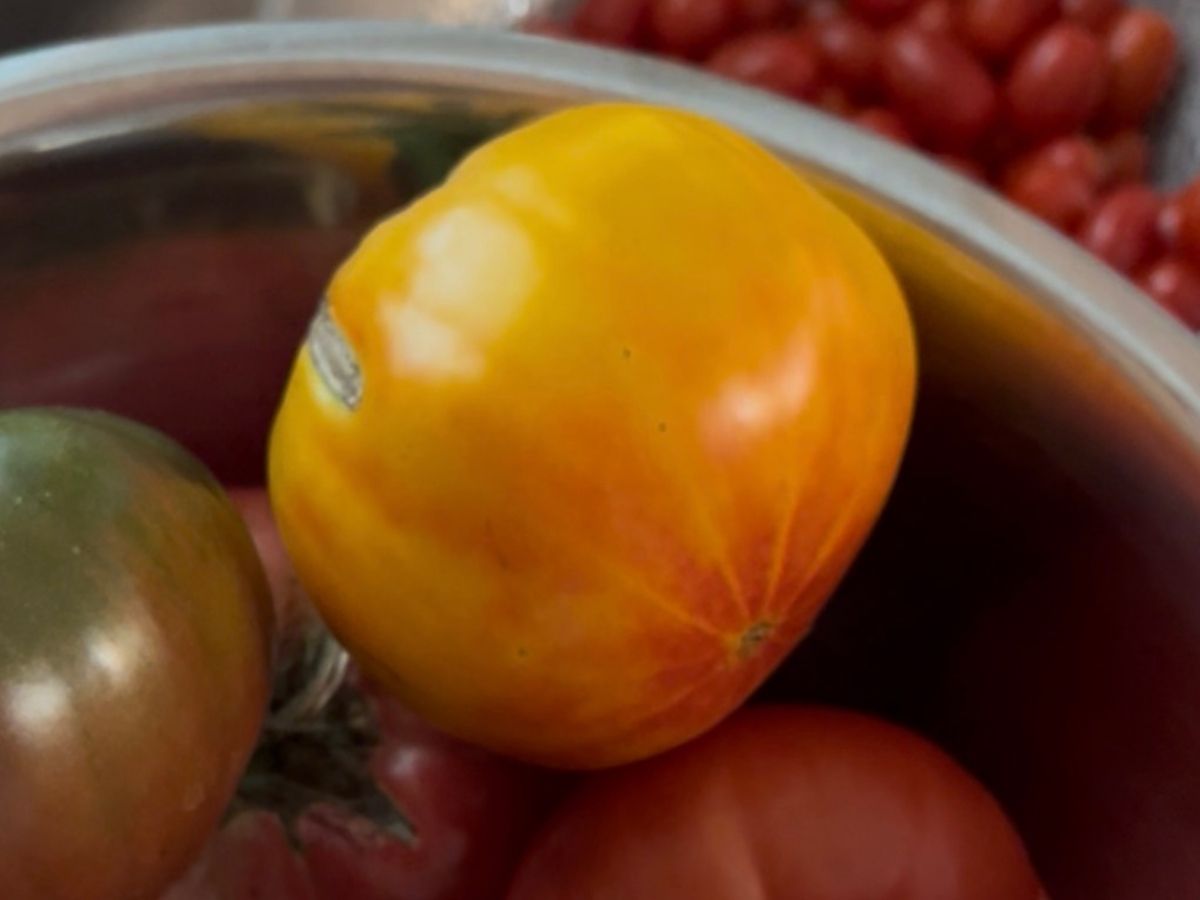
There comes a point every tomato season when abundance starts to feel vaguely threatening.
In July, you’re standing in the garden admiring the first ripe tomato like you personally invented agriculture. You carry it into the house. You put it somewhere safe. You slice it carefully. You make the tomato sandwich you have been thinking about since February.
By September, there are thirty-six pounds on the counter, another bowl on the Hoosier cabinet, cherry tomatoes rolling around everywhere, and you know perfectly well there are more waiting outside in the garden.
You have eaten them fresh. You have given them away. You have canned tomatoes. You have made sauce. You have made salsa.
And still:
Tomatoes.
This is what to do with them when you are officially tired of looking at them. And because September is no time for unrealistic expectations, we’re going to organize this according to how much ambition you have left.
Level One: I Need These Tomatoes Off My Counter
No canner. No elaborate recipe. Ideally, very little standing. This is where we begin.
Freeze Them Whole
Yes. Whole.
If you have tomatoes that are perfectly good but you cannot summon the will to do one more damn thing with them, put them in the freezer.
Wash them, remove the stems and cores if you want to, let them dry and freeze them on a sheet pan. Once they’re frozen solid, transfer them to freezer bags or containers. You can also skip the sheet pan if you don’t particularly care whether they freeze together in one giant tomato boulder. If you don’t core and destem them, you can just throw them staight in a freezer bag.
Frozen tomatoes won’t come back out suitable for sandwiches or salads. The texture changes completely. But they’re excellent for things that will eventually be cooked anyway: soups, sauces, chili and stews.
There’s also a nice little bonus: once frozen tomatoes thaw, their skins generally slip off much more easily. This is making the tomatoes October’s problem.
Roast the Lot of Them
When tomatoes are getting a little too soft for your liking, or you’re just sick of dealing with them individually, a sheet pan or roaster is your friend.
Cut larger tomatoes into chunks or halves. Cherry tomatoes can stay whole or be halved. Add garlic, onion or peppers if you have them and feel like it. Roast until everything collapses, caramelizes around the edges and starts looking considerably more useful than it did on your counter.
From there, you’ve got options. Blend it into sauce. Spoon it over pasta. Add it to soup. Put it on toasted sourdough. Freeze it. You don’t even have to decide immediately.
You’ve simply transformed tomato problem into roasted tomato situation, which is progress.
Make Tomato Toast
Before we turn the entire harvest into shelf-stable provisions for the coming winter, remember that you are allowed to simply eat the things.
Toast some good sourdough bread. Rub it with garlic if that’s your thing. Add sliced or chopped tomatoes, salt, pepper and whatever else sounds good.
Fresh herbs. Cheese. A drizzle of balsamic. An egg.
This is especially useful when you’ve got one or two spectacular heirlooms sitting around and it would be downright disrespectful to turn them into sauce. Not every tomato needs a project.
Level Two: Fine. I’ll Cook Something.
You have slightly more ambition today. Perhaps you slept well. Perhaps the tomatoes have simply broken your spirit. Either way, we’re turning on the stove.
Make a Big Pot of Tomato Sauce
There are approximately eleven billion tomato sauce recipes on the internet, and people have surprisingly strong feelings about all of them.
I’m not here to referee. What I will tell you is that a big pot of sauce can consume an impressive amount of tomatoes. And if you’re growing heirlooms, don’t overlook them because they aren’t paste tomatoes. They tend to contain more water, so they may need longer cooking to concentrate, but they can make absolutely wonderful sauce.
Use the tomatoes you have. That’s a recurring theme around here.
Make Pizza Sauce
This is where a substantial portion of my own tomato situation went this year. I had thousands of cherry tomatoes. I had hundreds of pounds of heirlooms. I had peppers, garlic, and herbs from the garden.
And I had counters that needed reclaiming.
So: pizza sauce.
Roasting the vegetables first concentrates the flavor before everything gets blended down, and suddenly an unreasonable pile of produce becomes a very reasonable number of jars. This is one of my favorite ways to preserve food because it’s something we’ll actually use.
That’s an important distinction. There is absolutely no prize for ending the season with 87 beautiful jars of something nobody in your house wants to eat.
Preserve your food.
If your family eats pizza, make pizza sauce. If you eat chili twice a month all winter, make chili starter. If you dump tomatoes and green chiles into half the things you cook, make those.
Your pantry should look like your kitchen.
Make Soup
Tomatoes disappear beautifully into soup. Tomato soup is the obvious answer, but they’re useful in vegetable soup, beef soup, tortilla soup, chili, and just about anything else that needs acidity and a good tomato base.
This is also where some of the less glamorous tomatoes can shine. A tomato doesn’t need to be Instagram-worthy to go into a soup pot. Cut off anything damaged or spoiled and use the good parts of sound tomatoes promptly.
Dinner does not care whether the tomato was pretty.
Level Three: Get the Jars
All right. You’ve accepted your fate.
The canner is coming out.
This is where a ridiculous tomato harvest starts becoming genuinely satisfying, because a counter full of chaos can turn into rows of food you will use all winter.
Can Plain Tomatoes
Not exciting. Extremely useful. There’s a reason people have been putting up tomatoes for generations.
Whole, halved, crushed or juiced tomatoes give you options later. Instead of deciding in September what every tomato needs to become, you can preserve a relatively neutral ingredient and figure it out in January.
A jar of tomatoes can become soup, sauce, chili, stew, or dinner on a night when nobody planned dinner. Useful beats exciting more often than people admit.
Make Tomatoes and Green Chiles
Call them homemade Rotel-style tomatoes if you like. I know exactly what I’m using them for. This is another one of those pantry items that makes sense to preserve if you already buy it.
Tomatoes and green chiles go into soups, taco filling, queso, casseroles, rice, beans, chili, and approximately nine hundred other things. And when both tomatoes and peppers are coming out of the garden at the same time, it seems downright rude not to introduce them.
Make Chili Starter
This one is for Future You. Instead of making and canning finished chili, put up the part that takes advantage of what the garden is producing right now: tomatoes, peppers and onions.
Then, when chili weather finally arrives, you’ve already done the annoying part. Open a jar. Add your meat and beans. Adjust the seasonings. Let it simmer.
September You gets rid of tomatoes.
January You gets dinner.
Make Salsa
Eventually someone is going to suggest salsa. Of course we’re making salsa. A pile of tomatoes can disappear remarkably quickly once onions, peppers, lime, and seasonings get involved.
Fresh salsa when you want immediate gratification. Canned salsa when you’ve got enough tomatoes and peppers to start thinking in batches.
And salsa has the distinct advantage of making a surprising amount of garden produce disappear at once. Then six months from now you get to open a jar and feel disproportionately pleased with yourself.
Level Four: I Want Future Me to Feel Smug
This is where preserving gets good. Because I don’t actually want a pantry full of ingredients just for the satisfaction of owning a pantry full of ingredients.
I want shortcuts.
Good ones.
Things made from food I grew, preserved when it was abundant, that make life easier several months from now. That’s the whole point.
Before you process another tomato, ask yourself:
What do I actually cook?
Not what would look charming lined up on a pantry shelf. Not what Pinterest says homesteaders are supposed to preserve. What do you reach for?
If you make pasta regularly, sauce makes sense. If pizza is in the rotation, pizza sauce makes sense. If you eat chili all winter, chili starter makes sense. If you cook a lot of Mexican-inspired soups, beans, rice and casseroles, tomatoes with green chiles make sense. If you make vegetable beef soup, plain canned tomatoes may be more valuable than another specialty sauce.
The goal isn’t to preserve tomatoes. The goal is to preserve food you’ll eat.
Don’t Forget the Cherry Tomatoes
Cherry tomatoes are adorable in July. By September, they reproduce on the counter when you’re not looking. Fortunately, they’re also incredibly useful.
Roast them until they burst. Toss them into pasta. Make fresh salsa. Cook them down into sauce. Add them to soup. Dry them.
Which brings me to one of my favorite low-effort ways to turn an absurd number of little tomatoes into something manageable.
Oven-Dry Them
Halve the tomatoes and dry them slowly in a low oven until they’ve lost most of their moisture and become concentrated little tomato flavor bombs.
How far you dry them depends on how you intend to store and use them, but don’t assume homemade oil-packed tomatoes are automatically safe sitting around at room temperature. Moist vegetables stored in oil can create the kind of low-oxygen environment we do not want to casually experiment with.
For longer storage, I prefer refrigeration for short-term use or freezing. Then you can grab a handful for pasta, bread, eggs, soups or sauces. A giant bowl of cherry tomatoes becomes a surprisingly small amount once they’re dried.
Which, by late tomato season, feels like a magic trick.
The Fuck-It Bucket
We need to discuss this because every gardener eventually reaches this point. You walk into the kitchen. You see the tomatoes.
They see you.
Neither party is particularly happy about the arrangement. And you simply do not have it in you today. This is when you need the Fuck-It Bucket.
It’s the collection of tomatoes that need something done with them soon but for which you currently have no plan whatsoever. Don’t let the pressure to make the perfect thing result in losing them entirely.
Freeze them.
Whole tomatoes? Freeze them.
A pile of cherry tomatoes? Freeze them.
Tomatoes you’ve already chopped but aren’t going to use? Freeze them.
You can roast them later.
You can make sauce later.
You can make soup later.
You can stand in front of the freezer in November and wonder why the hell you froze twelve pounds of tomatoes.
That’s November’s business.
Right now, the counter is clear.
And Eventually, You’ll Miss Them
This is the particularly insulting part. Right now, I’m surrounded.
There are tomatoes on the counter. Tomatoes waiting to be picked. Tomatoes that need dealt with today and tomatoes I’m pretending don’t need dealt with until tomorrow.
I have washed them, chopped them, roasted them, cooked them, canned them and found increasingly creative ways to make them disappear.
I’m tired of looking at tomatoes. And sometime this winter, I’ll open a jar. Maybe pizza sauce. Maybe chili starter. Maybe tomatoes destined for a pot of soup.
Outside, the garden will be sleeping. The kitchen won’t be overrun with produce. There won’t be another ripe tomato waiting for me tomorrow morning. And that jar will taste like September. Which is why I keep doing this ridiculous thing.
Grow things.
Make things.
Preserve things.
Get completely sick of them.
And miss them when they’re gone.